


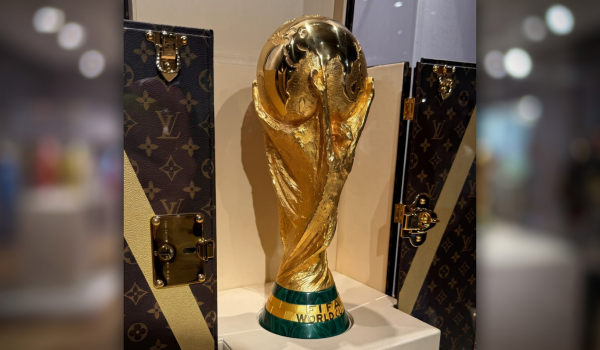
As the tournament reaches its grand finale, Spain and Argentina are set to battle for the biggest prize in world football. Fans are now focused on who will lift the iconic trophy—and what the winner will take home.
However, the World Cup is about much more than glory on the pitch. FIFA has significantly increased the tournament’s prize fund, making the 2026 edition the richest World Cup in history. Every participating nation receives financial support, so even teams eliminated early still return home with substantial earnings.
Here’s everything you need to know about the FIFA World Cup 2026 prize money distribution.
FIFA World Cup 2026 Offers Record Prize Money
The 2026 FIFA World Cup features a record-breaking total prize pool of approximately $1 billion, almost double the amount distributed at the previous tournament.
The expanded competition, featuring 48 national teams for the first time, has generated record-breaking revenue through broadcasting rights, sponsorship agreements, ticket sales, and commercial partnerships. As a result, FIFA has dramatically increased the financial rewards available to participating nations, strengthening the link between tournament growth and prize money.
This larger prize pool also reflects FIFA’s long-term goal of helping football associations invest in player development, youth academies, infrastructure, and grassroots football worldwide.
How Much Will the FIFA World Cup 2026 Champions Receive?
Winning the FIFA World Cup remains the greatest achievement in international football, and the financial reward is equally remarkable.
The nation that lifts the World Cup trophy will receive approximately 481 crore taka in prize money. Along with global recognition and football immortality, this financial reward provides a major boost for the country’s football federation.
Many national associations use the money to improve football facilities, develop youth talent, invest in coaching, and strengthen domestic competitions, helping the reward extend beyond the final whistle.
Prize Money for the FIFA World Cup 2026 Runners-Up
Finishing second is undoubtedly heartbreaking after coming so close to winning the title. Nevertheless, the runners-up will still receive a massive financial reward.
The team that loses the final will earn approximately 317 crore taka, making it one of the largest runner-up prizes in sporting history.
Although the trophy slips away, this amount helps support future football development and rewards the team’s successful campaign, making the setback easier to absorb.
Third and Fourth Place Prize Money
The rewards continue for the teams that reach the final stages of the tournament, with each position still carrying a major financial return.
The third-place team will receive approximately 279 crore taka, while the fourth-place finisher will take home around 260 crore taka.
Simply reaching the semi-finals guarantees every nation a substantial financial return while demonstrating its competitiveness on the global stage.
Quarter-Finalists Also Receive Huge Rewards
Reaching the quarter-finals is considered a significant achievement for many countries, particularly emerging football nations, and the prize reflects that progress.
Each team eliminated in the quarter-finals will receive approximately 183 crore taka.
For developing football nations, this prize money can fund infrastructure improvements, youth development programs, coaching education, and domestic football investment, turning progress into long-term growth.
Round of 16 Teams Earn Significant Prize Money
Eight teams that exit in the Round of 16 will each receive approximately 144 crore taka.
Although these nations fall short of reaching the quarter-finals, their performances still earn them substantial financial rewards that can positively impact football development for years to come.
Round of 32 Teams Still Receive Millions
Teams eliminated in the Round of 32 are also rewarded for progressing beyond the group stage.
Each of these 16 nations will receive approximately 106 crore taka.
This tiered reward system ensures that every knockout victory carries both sporting and financial significance, making each round matter more.
Even Group Stage Teams Do Not Leave Empty-Handed
One of the most impressive aspects of FIFA’s prize structure is that every participating country receives financial support, so no team leaves empty-handed.
Each national association is awarded approximately 101 crore taka, which includes preparation funding before the tournament begins.
Teams eliminated during the group stage receive around 87 crore taka in tournament prize money, while the remaining funds help cover training camps, travel, logistics, and other preparation costs.
This system ensures that even nations unable to advance beyond the opening round benefit financially from participating in football’s biggest event, reinforcing the value of every match.
How Is the Prize Money Distributed?
The prize money is paid directly to each country’s football federation rather than to individual players.
Each national association then decides how to allocate funds among players, coaching staff, technical teams, and support personnel, with distribution shaped by local priorities.
Many federations also invest a significant portion into football development projects, youth academies, stadium upgrades, coaching education, and grassroots programs.
In several cases, players voluntarily donate part of their bonuses to charitable organizations or community projects, demonstrating football’s positive impact beyond the pitch.
Some Countries Have Unique Prize Money Policies
Several football associations have introduced innovative approaches to distributing World Cup earnings, showing that prize money can serve different goals.
One nation has announced plans to allocate 80 percent of its World Cup prize money equally between the men’s and women’s national teams, provided the women’s team qualifies for the FIFA Women’s World Cup.
Meanwhile, players from another national team have pledged to donate part of their tournament bonuses to social causes and charitable initiatives.
These decisions highlight how football can create positive social change alongside sporting success, connecting financial rewards to broader impact.
FIFA World Cup 2026 Is the Biggest Tournament Ever
The 2026 edition has already rewritten the history books, building on its expanded format and global reach.
For the first time, 48 countries participated, expanding the tournament significantly compared to previous editions.
The tournament featured more matches, more goals, more host cities, and millions of fans from every corner of the globe.
Some of football’s biggest stars—including Lionel Messi, Kylian Mbappé, Erling Haaland, and several emerging talents—delivered unforgettable performances throughout the competition, making this World Cup one of the most exciting ever held.
FIFA Expected Record Revenue
The expanded tournament has also become a commercial success, with its scale helping drive revenue.
FIFA expects the 2026 World Cup to generate approximately 96,285 crore taka in revenue through broadcasting rights, sponsorship deals, hospitality packages, merchandise sales, licensing agreements, and ticket revenue.
This remarkable financial success allows FIFA to increase prize money while continuing to invest in football development across its member associations, linking earnings to future growth.
Why the World Cup Prize Money Matters
The FIFA World Cup is no longer just the pinnacle of international football—it is also one of the world’s largest sporting and economic events.
Every victory brings greater financial rewards, but even teams eliminated early receive valuable funding that can strengthen football in their countries. As a result, smaller football nations, especially, benefit from this system, allowing them to improve their infrastructure, discover new talent, and compete more effectively on the global stage.
Ultimately, lifting the World Cup trophy brings unmatched prestige, but the financial rewards ensure that every participating nation gains something valuable from the tournament.
As Spain and Argentina prepare to contest the 2026 FIFA World Cup Final, one team will celebrate not only football immortality but also a record-breaking prize. Yet every participating nation has already secured an investment that could shape football’s future for generations to come.