


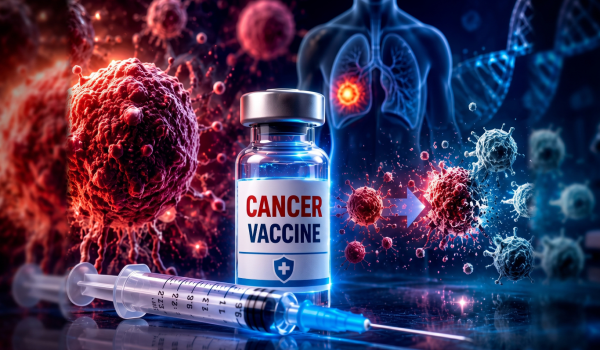
A new personalized cancer vaccine developed by Moderna and Merck has shown encouraging results in clinical trials involving patients with advanced melanoma, raising hopes for a new approach to preventing cancer from returning after treatment.
Researchers tested the experimental vaccine alongside Keytruda, a widely used cancer immunotherapy drug. Researchers are particularly interested in whether the combination can help the immune system identify and destroy cancer cells before they spread to other parts of the body.
Personalized Cancer Vaccine Tested in Melanoma Patients
The vaccine is being developed primarily for people with melanoma, an aggressive form of skin cancer. In the reported trial, patients with high-risk, late-stage disease received the experimental vaccine alongside Keytruda.
The companies involved have described the early findings as encouraging. The goal is not simply to remove an existing tumor, but to train the body’s immune system to recognize cancer cells and respond if they reappear.
This could be especially important for patients who have already undergone surgery or other cancer treatments. Even after a tumor has been successfully removed, cancer can sometimes return or spread elsewhere in the body.
How Does the Cancer Vaccine Work?
Unlike a traditional vaccine designed to prevent an infectious disease, this experimental cancer vaccine is intended to help the immune system fight cancer.
The treatment uses mRNA technology, a platform that gained widespread attention through COVID-19 vaccines. In this case, the technology is being adapted to create a personalized treatment based on an individual’s cancer characteristics.
The vaccine is designed to help the immune system recognize specific features of cancer cells. Once those features are identified, the body’s immune defenses may be better prepared to attack cancer cells if they return.
Because every patient’s tumor can have different characteristics, the vaccine needs to be customized for each individual.
Moderna and Merck Combine Vaccine With Keytruda
The experimental treatment combines Moderna’s personalized cancer vaccine technology with Merck’s Keytruda.
Researchers believe the two treatments could work together to strengthen the body’s immune response against cancer.
Keytruda is already an established immunotherapy treatment. It helps the immune system recognize and attack cancer cells. The personalized vaccine is intended to provide the immune system with additional information about the specific cancer it needs to target.
The combination could therefore offer a more targeted approach to preventing melanoma from returning.
Could the Vaccine Prevent Cancer From Coming Back?
One of the biggest hopes surrounding the research is that the vaccine could reduce the risk of cancer recurrence.
Cancer treatment often involves removing a tumor through surgery, followed by additional therapies when necessary. However, microscopic cancer cells can sometimes remain in the body even when doctors can no longer detect an obvious tumor.
Those remaining cells can grow later and lead to a recurrence.
A personalized cancer vaccine could, in theory, help the immune system detect those cells early and destroy them before they develop into another major tumor.
Researchers are still studying whether the treatment can deliver that benefit consistently across larger groups of patients.
Treatment Is Still Under Investigation
Despite the encouraging early results, the vaccine should not yet be described as a universal cure for cancer.
Clinical trials are designed to determine whether an experimental treatment is safe and effective. Larger, longer studies must confirm promising early findings before a treatment can become widely available.
Cancer is also not a single disease. There are hundreds of different types and subtypes, each with different biological characteristics.
A treatment that works well against melanoma may not automatically work in the same way against breast, lung, bowel or pancreatic cancers.
For that reason, researchers are also investigating whether personalized mRNA cancer vaccines could eventually be adapted for other forms of the disease.
Russia Also Reports Progress With Cancer Vaccine
The latest developments come shortly after Russia’s Gamaleya Research Institute reported promising early results from its own experimental melanoma vaccine.
According to reports, a patient who received the Russian treatment showed encouraging signs of improvement. Researchers said the treatment appeared to stimulate biological responses that could help the immune system fight both tumors and metastatic disease.
Russia has also previously approved domestically developed cancer treatments, highlighting the growing international race to develop new forms of cancer immunotherapy.
A Potential New Era in Cancer Treatment
The development of personalized cancer vaccines marks an important shift in how researchers think about cancer treatment.
Traditional cancer therapies often focus directly on destroying tumors. Immunotherapy takes a different approach by helping the body’s own immune system fight the disease.
Personalized vaccines could take that idea one step further by giving the immune system detailed information about an individual’s specific tumor.
If future trials confirm the early results, such treatments could eventually become part of standard care for certain cancer patients.
However, experts caution that much more research is needed before these vaccines can be offered to the general public.
For now, the results provide a reason for optimism rather than proof that cancer has been defeated. The ultimate goal is ambitious: helping the immune system detect cancer earlier, prevent its return, and stop it from spreading.
If larger clinical trials continue to produce positive results, personalized cancer vaccines could become one of the most important developments in cancer treatment in the years ahead.