


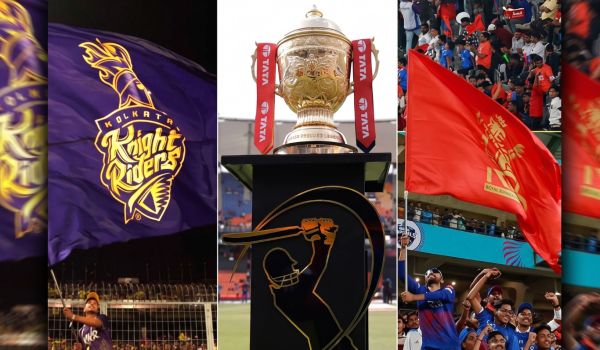
The growing list of injured Indian cricketers has triggered a fresh debate over workload management, player fitness, and the demanding schedule of the Indian Premier League.
Jasprit Bumrah, Harshit Rana, and Nitish Reddy are among the Indian players who have recently faced injury concerns. As questions continue over how players are being assessed and cleared for international cricket, attention has also turned toward the Board of Control for Cricket in India’s Center of Excellence.
According to reports, officials at the Center of Excellence have raised concerns about the IPL’s impact on Indian players’ physical condition.
The reported criticism is particularly significant because the Center of Excellence operates within the BCCI’s own cricketing structure.
IPL Workload Comes Under the Spotlight
The IPL has become one of the biggest cricket tournaments in the world. For players, however, the intensity of the competition comes with a demanding schedule.
According to reports citing sources, some players may continue playing in the IPL despite injuries or other physical problems due to the pressure surrounding the tournament.
The concern is that players may focus on completing the IPL season without fully considering how existing injuries could develop.
Once the tournament ends, those players may then require rehabilitation and recovery through the Center of Excellence.
That creates a difficult situation for the national team.
The same players needed for international assignments may arrive with physical problems that require additional treatment and conditioning.
Too Much Cricket Could Be Taking a Toll
Workload management has become one of the biggest challenges in modern cricket.
International players can now compete in Test matches, ODIs, T20 internationals, and domestic competitions while also participating in franchise leagues around the world.
The IPL sits at the center of India’s domestic cricket calendar and attracts the country’s biggest stars.
While the tournament provides valuable competition and financial opportunities, the physical demands can be significant, particularly for fast bowlers.
Fast bowling places considerable stress on the muscles, joints, and the body as a whole. Repeated matches with limited recovery time can complicate injury management.
The concerns reportedly raised by the Center of Excellence reflect a wider question facing Indian cricket: How much cricket can players realistically handle before their bodies begin to suffer?
Questions Over the Return-to-Play Process
The controversy is not limited to the IPL itself.
Questions have also emerged about whether injured players consistently follow an appropriate return-to-play protocol before being cleared for competitive cricket.
A return-to-play process is designed to determine whether a player has recovered sufficiently to resume high-intensity competition.
Simply feeling better does not necessarily mean an athlete is ready for professional cricket.
Players may need to complete rehabilitation exercises, fitness tests, and sport-specific workloads before returning to matches.
The recent injury cases have therefore led to questions about whether India’s current system is working as effectively as it should.
Center of Excellence Faces Its Own Review
The Center of Excellence is also facing scrutiny over its handling of injured players.
After Nitin Patel left his previous position, the sports science department reportedly did not immediately have a permanent head. Dhananjay Kaushik has been overseeing the department on an interim basis.
Reports have suggested that the system used to manage injured players could be reviewed.
India team physiotherapist Kamlesh Jain has also reportedly come under scrutiny, with a possible performance review being discussed.
Such a review would be important if the BCCI wants to understand why players who are declared fit sometimes return to competitive cricket only to suffer another setback.
Jasprit Bumrah’s Fitness Raises Questions
Jasprit Bumrah’s situation has become one of the most prominent examples in the current debate.
The Indian fast bowler was reportedly declared fit ahead of a Sri Lanka series, only for his availability to change soon afterward.
That development raised questions within Indian cricket.
If a player is declared fit shortly before a series but then becomes unavailable again because of an injury concern, it naturally raises questions about the accuracy of the initial assessment.
Bumrah’s importance to India’s bowling attack makes his fitness especially significant.
The team management has repeatedly had to manage his workload carefully because of his history of physical problems.
Harshit Rana and Washington Sundar Add to the Concerns
Harshit Rana has also become part of the wider fitness discussion.
Reports have questioned the decision to clear him despite concerns surrounding his physical condition, before he later suffered a hamstring problem.
Washington Sundar has also faced injury issues, adding another name to an increasingly worrying list.
The cases have led to questions about whether India’s players are returning to competition too quickly or whether the intense demands of the IPL are contributing to recurring injuries.
However, establishing a direct connection between the IPL and any individual injury requires medical evidence.
Players can suffer injuries during training, international cricket, domestic competitions, or even normal fitness work.
Therefore, it would be premature to blame the IPL for every injury affecting Indian cricketers.
Why Fast Bowlers Face Greater Risk
Fast bowlers are particularly vulnerable to workload-related problems.
A professional fast bowler can deliver hundreds of high-intensity balls during a tournament, with every delivery placing significant force on the body.
The workload becomes even more complicated when players move between different formats.
A bowler preparing for T20 cricket may have different physical requirements from one preparing for Test matches.
If recovery periods are shortened, the transition between formats can become difficult.
For India, this is especially important because the national team relies heavily on a group of elite fast bowlers.
Keeping those players healthy is essential for maintaining India’s strength across all three formats.
The Bigger Problem: India’s Crowded Cricket Calendar
The debate surrounding the IPL reflects a much larger issue.
Modern professional cricketers rarely have long periods without competitive cricket.
International schedules are packed, franchise leagues continue to expand, and domestic competitions remain important.
For India’s top players, the situation can be even more demanding due to the IPL’s popularity and commercial importance.
The challenge for administrators is finding a balance between giving players enough cricket to remain competitive while also providing enough recovery time to prevent injuries.
That balance becomes particularly difficult when players are carrying minor injuries.
A player may be able to participate in a T20 match while still being at risk of a more serious problem.
Should Players Be Protected From Playing Through Injuries?
One of the central concerns reportedly raised by the Center of Excellence is whether players feel pressure to continue playing despite physical problems.
Franchise teams naturally want their best players available during the IPL.
Players may also want to compete out of commitment to their teams, teammates, and fans.
But playing through an injury can sometimes make the problem worse.
That can eventually hurt both the franchise and the national team.
A player who completes an IPL season while carrying an injury may then miss an important international series because the condition has deteriorated.
This creates a difficult situation for everyone involved.
The National Team Ultimately Pays the Price
The biggest concern for Indian cricket is what happens after the IPL.
If several important players require rehabilitation at the same time, the national team’s selection options can become limited.
Coaches and selectors may have to replace established players with less experienced alternatives.
That can be particularly damaging before major international tournaments or important Test series.
The Center of Excellence, therefore, has an important role in ensuring that injured players recover properly and return to cricket only when they are genuinely ready.
IPL Is Not Automatically the Cause of Every Injury
Despite the criticism, it is important to avoid drawing conclusions before the evidence is available.
The IPL is a high-intensity competition, but injuries are an unavoidable part of professional sport.
Players can become injured for many reasons, including workload, biomechanics, previous injuries, training conditions, and simple bad luck.
The fact that several players were injured around the same period does not automatically prove that the IPL caused those injuries.
The latest controversy highlights the need for better workload monitoring and clearer communication among franchise teams, medical staff, the Center of Excellence, and the Indian national team.
A Critical Moment for Indian Cricket’s Fitness System
The current debate could ultimately lead to changes in how India manages player fitness.
The BCCI may need to examine whether its existing return-to-play procedures are sufficiently strict and whether communication between different medical teams is working effectively.
There may also be a need for better tracking of player workloads throughout the IPL season.
Rather than waiting for injuries to become serious, teams could use detailed physical data to identify warning signs earlier.
For India’s leading players, especially fast bowlers, prevention may be far more valuable than rehabilitation after an injury has already occurred.
IPL vs India: Finding the Right Balance
The IPL remains one of the most important competitions in world cricket, and there is little doubt that it has played a major role in developing India’s T20 talent.
But its success also creates a difficult responsibility.
Players need opportunities to compete, franchises need their stars, and the national team needs its best cricketers available for international duty.
The solution is unlikely to be simply blaming one tournament.
Instead, Indian cricket may need a more coordinated approach involving franchises, the BCCI, medical teams, coaches, and players themselves.
The recent injury concerns surrounding Bumrah, Harshit Rana, Nitish Reddy, and Washington Sundar have brought the issue back into focus.
Whether the IPL itself is responsible for these injuries remains a question that requires proper medical and workload data.
But the broader warning is clear: Indian cricket needs to find a sustainable way to manage an increasingly demanding calendar before player injuries become an even bigger problem for the national team.