

The 2026 FIFA World Cup final was expected to be remembered as a celebration of football excellence. Instead, its closing moments became one of the most controversial scenes in World Cup history.
What should have been a memorable trophy presentation quickly turned into an ugly spectacle featuring shoving, punches, red cards, and emotional exchanges.
Spain Clinch the World Cup Title with a Dominant Display
Spain entered the final with confidence and produced a disciplined performance throughout the 120-minute contest. Their passing, organization, and defensive stability allowed them to control much of the game.
Argentina, on the other hand, struggled to find its usual rhythm. Their attack lacked creativity, the midfield failed to dictate possession, and defensive mistakes repeatedly invited pressure from Spain.
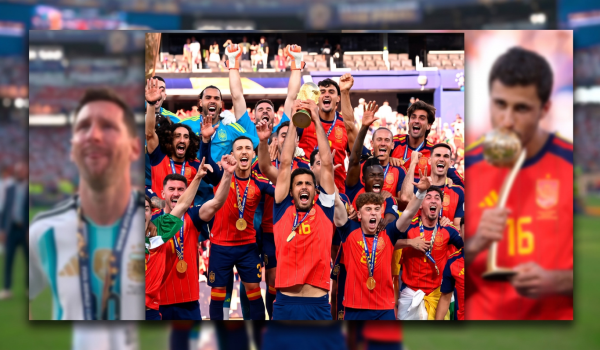
After a hard-fought battle, Spain secured the winning goal and lifted the FIFA World Cup trophy, capping off an impressive tournament run.
However, the celebrations lasted only moments before emotions exploded on the pitch.
Final Whistle Triggers Heated Confrontation
As soon as the referee blew the final whistle, Spain’s players rushed onto the field to celebrate their World Cup triumph.
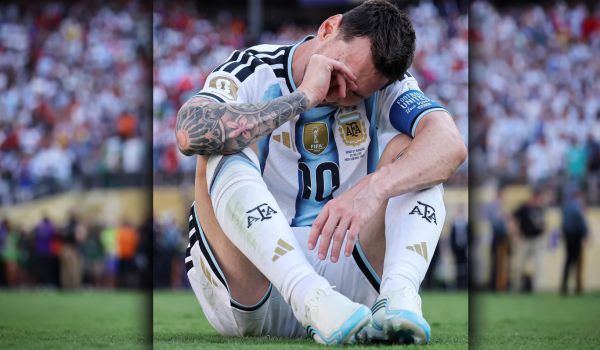
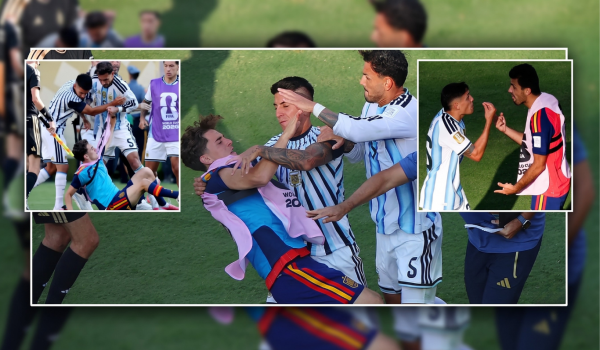
Instead of accepting defeat, several frustrated Argentine players confronted members of the Spanish squad.
The situation escalated quickly.
Defender Nahuel Molina appeared visibly upset as substitute players joined Spain’s celebrations. Moments later, midfielder Leandro Paredes became involved in an intense confrontation with Spain’s young star Gavi.
Witnesses said the disagreement quickly turned physical, with Paredes allegedly pushing Gavi to the ground and attempting to throw punches. Within seconds, players from both teams surrounded the incident, creating scenes of disorder in the middle of the pitch.
Leandro Paredes Receives Straight Red Card
Match referee Slavko Vinčić acted swiftly to restore order.
After assessing the confrontation and its seriousness, the referee showed Leandro Paredes a straight red card, even though the match had already ended.
The decision underlined football’s commitment to punishing violent conduct regardless of whether play is still underway.
A red card after the final whistle is uncommon but still allowed under the Laws of the Game when players engage in violent or abusive behavior.
The dismissal has now placed Paredes under further scrutiny, with many expecting FIFA to review the incident in greater detail.
Enzo Fernández was already sent off during the Match.
Argentina’s disciplinary problems began before the full-time season.
Midfielder Enzo Fernández had already been dismissed after receiving a second yellow card for a reckless challenge on Spain defender Pau Cubarsí.
His sending-off forced Argentina to finish the closing stages with ten players, making their task even harder.
The red card reflected the growing frustration within the Argentine side as Spain continued to control the match.
Alan Shearer Criticizes Argentina’s Conduct
Former England striker and football analyst Alan Shearer criticized Argentina’s behavior during the post-match analysis.
According to Shearer, losing a World Cup final is heartbreaking, but professional players must maintain self-control regardless of the result.
He argued that attempts to punch an opponent have no place in football’s biggest match and suggested the scenes overshadowed what should have been a celebration of Spain’s achievement.
Shearer stressed that millions of fans around the world watch the World Cup not only for great football but also for respect, professionalism, and fair play.
Social Media Reacts to the World Cup Final Chaos
Videos of the confrontation spread across social media within minutes.
Football supporters around the world said they were disappointed by the behavior shown after the final whistle.
Many fans described Leandro Paredes’ actions as unacceptable and called for disciplinary action.
Others argued that while the pain of losing a World Cup final is understandable, professional athletes must set an example by accepting defeat with dignity.
Several supporters also praised Spain’s players for trying to avoid further escalation during the confrontation.
The debate quickly became one of the most discussed football topics online, with opinions divided over whether emotions boiled over or harsher punishment is necessary.
Lionel Scaloni Also Involved in Heated Exchange
The tension was not limited to the players.
Argentina head coach Lionel Scaloni was also seen exchanging heated words with Spain defender Eric García after the match.
Although the disagreement did not escalate into violence and eventually cooled, television cameras captured the exchange, adding another layer to the controversy.
The images showed the emotional intensity surrounding the final and how difficult the defeat was for everyone associated with Argentina.
FIFA Could Launch Disciplinary Investigation
The incident may not end with the final whistle.
FIFA traditionally takes post-match violence extremely seriously, particularly during major international tournaments.
The governing body is expected to examine several pieces of evidence, including the referee’s official match report:
- Video footage from multiple camera angles.
- Reports submitted by the match commissioner.
- Statements from disciplinary officials.
If investigators determine that violent conduct occurred, additional sanctions could follow.
Possible punishments may include multi-match suspensions, financial fines, or other disciplinary measures against those found responsible.
No final disciplinary decision has been officially announced at the time of writing.
Spain’s Historic Triumph Overshadowed
Unfortunately for Spain, much of the post-match discussion shifted away from their remarkable achievement.
The newly crowned world champions delivered an outstanding performance worthy of international recognition, yet headlines across the football world focused largely on the post-match confrontation rather than on Spain’s tactical play.
Winning a World Cup is one of football’s greatest accomplishments, but the scenes after the final whistle overshadowed many of the sporting achievements witnessed during the match.
Sportsmanship Remains Football’s Greatest Value
World Cup finals are filled with emotion, pressure, and enormous expectations.
Victory creates unforgettable joy, while defeat brings deep disappointment. Yet football has always promoted respect, discipline, and fair competition above all else.
The events following this year’s final serve as a reminder that emotions must not cross the line into violence.
As fans await FIFA’s disciplinary verdict, attention remains fixed on the consequences that may follow for Leandro Paredes and any other individuals involved in the confrontation.
Regardless of any future sanctions, the match will be remembered for two very different reasons. Spain secured one of the greatest victories in its football history, while Argentina’s emotional response after the final whistle produced one of the most controversial endings ever witnessed in a FIFA World Cup final.