

Did Argentina Fail Lionel Messi in the World Cup Final?
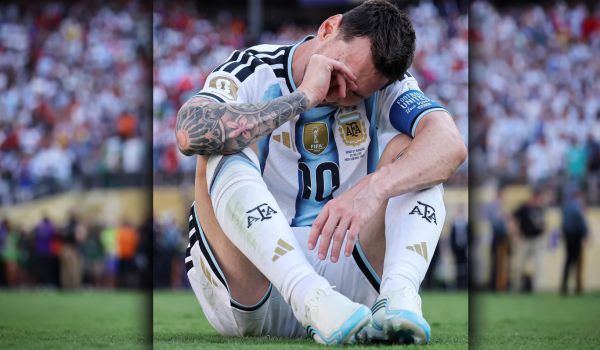
World Cup finals are remembered for generations. They create heroes, heartbreak, and unforgettable moments that become part of football history. For Lionel Messi, this final ended in disappointment rather than celebration. Spain’s young sensation Lamine Yamal celebrated one of the biggest victories of his career, while Argentina’s captain walked away frustrated and silent.
As the final whistle echoed around the New York–New Jersey Stadium, thousands of Argentine supporters chanted Messi’s name. The legendary forward stood quietly, looking toward the crowd for several moments. His expression reflected gratitude, emotion, and perhaps the realization that this could have been his final appearance on football’s biggest stage.
Whether it marked the end of his World Cup journey remains uncertain, but the scene left fans wondering if Argentina truly gave their captain the support he deserved.
Lionel Messi Continued to Prove His Greatness at 39
At 39 years old, Lionel Messi once again demonstrated that football intelligence can be just as valuable as speed.
Throughout his remarkable career, Messi has continuously reinvented himself. From the explosive teenage star at Barcelona to the experienced playmaker leading Argentina and Inter Miami, he has adapted his style at every stage. Although he no longer relies on explosive pace, his vision, passing ability, decision-making, and leadership remain among the very best in world football.
Yet despite his experience and influence, the World Cup final raised one question: was Messi unable to make the impact everyone expected?
Lionel Scaloni’s Emotional Reaction Raised More Questions
Following Argentina’s defeat, head coach Lionel Scaloni faced difficult questions during the post-match press conference.
When reporters asked whether Messi would continue with the national team, Scaloni admitted that no discussion had taken place. As he answered further questions, emotions overwhelmed him. The coach struggled to hide his tears as he spoke about his future, then left the press conference early. His emotional reaction reflected just how devastating the defeat was for everyone inside the Argentine camp.
Argentina’s Tactical Approach Failed to Maximize Messi’s Strengths
One of the biggest talking points after the final centered on Argentina’s tactical decisions.
Instead of focusing on possession-based football and building attacks through Messi, Argentina adopted a highly physical and aggressive approach from the opening whistle. The match quickly became filled with intense duels, fouls, and constant physical battles.
As a result, Messi rarely received the ball in dangerous positions where he could influence the game. Football analysts argued that Argentina’s game plan may have isolated their most creative player. Rather than allowing Messi to dictate the tempo, the team’s strategy pushed the game into a physical contest that suited Spain more than Argentina.
Many observers believe this tactical choice became one of the defining factors behind the defeat.
Spain Controlled the Match From Start to Finish
Spain imposed their style throughout the final.
Their midfield controlled possession with quick passing, intelligent movement, and constant positional changes. Argentina struggled to keep the ball and failed to establish any rhythm. Spain’s pressure prevented Argentina from building meaningful attacks. The South American side failed to create effective partnerships in the final third, leaving Messi isolated for long stretches. While Argentina searched for momentum, Spain remained calm, organized, and confident with the ball.
That control ultimately allowed Spain to dominate large portions of the match.
Refereeing Decisions Sparked Debate
The final was not without controversy.
Several refereeing decisions quickly became major talking points among supporters and football experts.
One incident involved a heavy challenge by Alexis Mac Allister on Dani Olmo. Many Spanish supporters believed the tackle deserved stronger punishment than the verbal warning issued by the referee.
Inside the stadium, sections of the crowd voiced their frustration, while social media quickly filled with debates over the referee’s performance.
Although these incidents heightened tension at the occasion, they did not ultimately determine the outcome of the final.
Argentina’s Aggression Overshadowed Their Football
Argentina’s physical approach became increasingly noticeable as the match progressed.
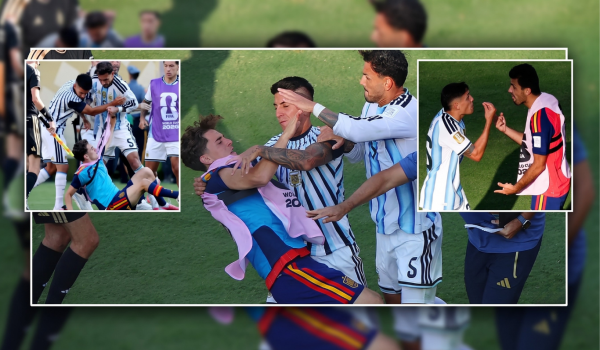
Strong tackles from Lisandro Martínez, confrontations involving Enzo Fernández, and substitute Leandro Paredes’ heated behavior all contributed to a growing sense of frustration. Even Messi, normally calm in his leadership, was repeatedly seen speaking with the referee about incidents involving Spain’s players. Instead of showcasing Argentina’s technical quality, the match’s closing stages were dominated by fouls, arguments, and confrontations.
For many neutral fans, that shift took attention away from the football itself.
The Statistics Revealed Argentina’s Offensive Struggles
The numbers painted a difficult picture for Argentina.
During the entire 90 minutes of regular time, Argentina failed to register a single shot on target. For a team featuring Lionel Messi, this was one of the most disappointing attacking performances in a World Cup final. Spain, by comparison, managed 12 shots on target and consistently tested Argentina’s defense.
Perhaps the most revealing statistic came from the first half, when Argentina committed more fouls than successful passes inside Spain’s final third.
That alone illustrated how far Argentina drifted away from its usual attacking identity.
Messi’s best opportunity finally arrived in the 117th minute, but his effort missed the target. It proved to be Argentina’s clearest chance of the entire evening.
Tempers Flared After the Final Whistle
Emotions boiled over immediately after the match ended.
Players from both teams became involved in heated exchanges, with pushing and confrontations breaking out across the pitch. Leandro Paredes was at the center of several incidents as tensions escalated. The post-match scenes slightly overshadowed what had otherwise been a tournament filled with outstanding football and fierce but respectful competition.
Was Messi Really Let Down by Argentina?
Following the defeat, many supporters argued that Argentina had failed their captain.
There is some logic behind that opinion.
MeMessi was rarely placed in positions where he could influence the match. The team’s aggressive tactics, lack of ball retention, and limited attacking creativity prevented him from showcasing his strengths. However, describing the situation as a “betrayal” goes beyond the available evidence.
Football matches are decided by numerous factors, including tactics, execution, mental strength, and individual performances. While Argentina made strategic mistakes, there is no established evidence that Messi was intentionally abandoned or treated unfairly by his teammates or coaching staff.
Instead, the defeat reflects a combination of tactical shortcomings, Spain’s superior performance, and Argentina’s inability to adapt during the biggest match of the tournament.
Lionel Messi’s Legacy Remains Untouched
One painful defeat cannot erase an extraordinary career.
Across 34 World Cup appearances, Lionel Messi has broken countless records and inspired millions of football fans worldwide. His achievements extend far beyond trophies, statistics, or individual awards.
For more than two decades, he has consistently redefined excellence through creativity, consistency, leadership, and remarkable skill.
Whether this final marked his last World Cup appearance or not, Messi’s place among football’s greatest players is already secure.
Argentina may look back on this final as a missed opportunity caused by tactical errors, excessive aggression, and ineffective attacking play. Yet Messi’s contribution to football remains timeless.
His legacy will not be remembered because of one defeat.
It will be remembered for his transformation of the game, inspiring generations of players, and for building one of the greatest careers in football.