


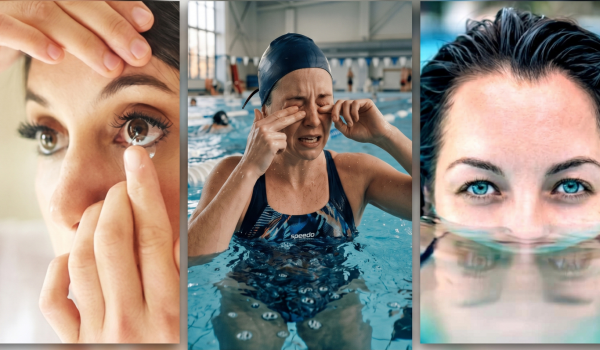
Wearing contact lenses may make everyday life easier, especially for people who do not want to wear glasses. But there is one simple mistake that can put your eyesight at serious risk: allowing contact lenses to come into contact with water.
Swimming, showering, or even washing your face while wearing contact lenses can increase the risk of a rare but potentially serious eye infection called Acanthamoeba keratitis. In severe cases, the infection can damage the cornea and may lead to permanent vision problems.
A case involving a 38-year-old British man, Matt Flack, highlights just how dangerous this seemingly harmless habit can be.
A Holiday Swim Turned Into a Serious Eye Problem
Flack was visiting Bali, Indonesia, when he went swimming in a pool while wearing contact lenses. Not long afterward, he began experiencing discomfort in his left eye.
His symptoms included severe pain, redness, excessive watering, and extreme sensitivity to light. At first, he believed something had simply irritated his eye while surfing. He suspected that sand or salty water might have entered his eye.
He removed his contact lens, expecting the problem to improve. Instead, the pain continued and gradually became worse.
After returning to the United Kingdom, Flack sought medical attention. Doctors examined his eye and collected a sample from the cornea for testing. The results revealed that he had Acanthamoeba keratitis, a rare infection caused by the microscopic organism Acanthamoeba.
The case is an important reminder that contact lenses and water can be a dangerous combination.
What Is Acanthamoeba Keratitis?
Acanthamoeba keratitis is an infection of the cornea, the clear front surface of the eye.
The infection is caused by Acanthamoeba, a microscopic organism found in soil, dust, and water. It may also be present in swimming pools, lakes, and other water sources.
Although the infection is uncommon, it can become extremely serious, particularly when diagnosis and treatment are delayed.
Contact lens wearers face a higher risk because water can become trapped between the contact lens and the eye’s surface. If Acanthamoeba is present in that water, it can attach to the cornea and cause infection.
This is why eye-care professionals generally advise contact lens users to avoid exposing their lenses to water.
Why Contact Lenses and Water Are a Bad Combination
Many people assume that swimming with contact lenses is safe if the water looks clean. Unfortunately, clear water does not necessarily mean germ-free water.
The problem is not limited to swimming pools. Contact lenses can also come into contact with microorganisms when someone showers, bathes, or washes their face while wearing them.
Even daily disposable contact lenses do not completely eliminate the risk. Although these lenses are designed for single-day use, the key issue is still exposure to water.
In simple terms, the safest approach is to remove contact lenses before swimming, showering, or entering any situation where the lenses could come into contact with water.
Early Symptoms Can Look Like a Common Eye Infection
One of the biggest challenges with Acanthamoeba keratitis is that its early symptoms can resemble those of more common eye problems.
That can make the infection difficult to identify at first. Someone may assume they simply have conjunctivitis, irritation, or a minor infection and delay seeing an eye specialist.
Common symptoms may include:
Severe eye pain, redness, excessive watering, and increased sensitivity to light are important warning signs. Some people may also experience blurred or cloudy vision, a sensation of something being stuck in the eye, or difficulty keeping the affected eye open.
In some cases, changes may also become visible on the cornea.
Because the symptoms can worsen over time, persistent or severe eye discomfort should not be ignored, especially when it develops after contact lens use and exposure to water.
Delayed Treatment Can Increase the Risk of Vision Loss
Acanthamoeba keratitis can damage the cornea if left untreated.
The cornea plays a crucial role in focusing light into the eye. Damage to this transparent surface can therefore affect vision.
The condition can be difficult to diagnose and may require specialist testing. Treatment can also take time, and recovery may be prolonged.
In severe cases, corneal damage can result in lasting visual impairment. This is why early medical attention is so important when someone develops unusual or severe eye symptoms.
The lesson is simple: do not assume that serious eye pain after swimming or showering with contact lenses is just temporary irritation.
Showering With Contact Lenses Can Also Be Risky
Swimming often receives the most attention when it comes to contact lens safety, but showering deserves the same caution.
Tap water can contain microorganisms that are harmless when they come into contact with healthy skin, but may pose a greater risk when trapped against the eye beneath a contact lens.
For this reason, contact lens users should remove their lenses before showering.
The same precaution applies when bathing, swimming, or participating in other activities where water may enter the eyes.
How to Protect Your Eyes When Wearing Contact Lenses
Preventing Acanthamoeba keratitis starts with simple contact lens habits.
Always remove your contact lenses before swimming. Take them out before showering or bathing as well.
Never rinse contact lenses with tap water. Contact lenses should only be cleaned and stored according to the instructions provided by an eye-care professional and the lens manufacturer.
Wash and dry your hands thoroughly before handling your lenses. Follow the recommended replacement schedule and avoid using lenses beyond their intended period.
It is also important to keep the contact lens case clean and to replace it regularly, as advised by professionals.
These may seem like small precautions, but they can make a significant difference to eye health.
Do Not Ignore Severe Eye Symptoms
If you wear contact lenses and develop severe pain, redness, excessive watering, sensitivity to light, or blurred vision, take the symptoms seriously.
This is especially important if the symptoms appear after swimming, showering, or in other situations where your contact lenses were exposed to water.
Removing the lenses is an important first step, but it should not replace a medical evaluation when symptoms are severe or persistent.
An eye specialist can determine whether the problem is simple irritation, a common infection, or something more serious, such as Acanthamoeba keratitis.
The Simple Rule Every Contact Lens User Should Remember
Contact lenses and water should generally be kept apart.
A quick swim or shower while wearing lenses may seem harmless, but exposure to contaminated water can allow microorganisms to reach the cornea.
Acanthamoeba keratitis is rare, but its potential consequences can be serious. The best protection is prevention: remove your lenses before swimming or showering, follow proper lens-care instructions, and seek professional medical advice promptly if unusual eye symptoms appear.
Your eyesight is far too valuable to risk for a few minutes of convenience.