
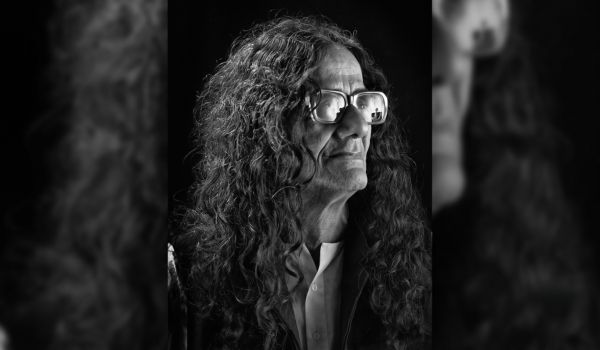

S. M. Sultan holds a special place in the history of Bangladeshi art. He was not simply a painter who created beautiful images. Through his bold and powerful paintings, he gave farmers, workers, women, children, rivers and rural landscapes a new artistic identity.
Born in Narail in 1924, Sultan became widely known for his unusual portrayal of rural people. Instead of presenting farmers as weak, poor or helpless, he painted them with enormous bodies, powerful muscles and remarkable physical strength. In his artistic world, farmers were not ordinary laborers. They were the people who built society, produced food and kept civilization moving.
His work combined beauty with social meaning. Behind the powerful figures on his canvases were stories about land, labor, production, class, survival and the relationship between human beings and nature. That is why S. M. Sultan remains one of the most distinctive figures in the history of Bangladeshi painting.
The Early Life of S. M. Sultan in Narail
S. M. Sultan was born Sheikh Mohammad Sultan on August 10, 1924, in the Machimdia village of Narail. His father, Meschher Ali, worked as a mason, while his mother was Maju Bibi. As a child, Sultan was affectionately called “Lal Mia,” a name by which many people in Narail continued to know him.
He developed a passion for drawing at an early age. Although financial difficulties limited his formal education, the world around him became his classroom. He observed village life, people, animals, rivers and nature closely.
Even as a young boy, his artistic ability attracted attention. After drawing a portrait of local landlord Shyamaprasad Mukherjee, he impressed people around him with his talent. That early recognition eventually helped open a path from Narail to Kolkata.
From Kolkata Art School to an Independent Artistic Vision
During the late 1930s, Sultan moved to Kolkata, where he met art critic and cultural figure Shahid Suhrawardy. Recognizing the young artist’s potential, Suhrawardy encouraged him and helped him gain an opportunity to study at the Calcutta Art School.
However, Sultan never allowed formal art education to completely define his creative identity. His strongest influences came from ordinary people and the natural world. He wanted to create an artistic language based on his own observations and experiences.
After leaving art school, he traveled to different parts of the region. His journey to Kashmir was particularly important because it allowed him to observe mountain communities, their lifestyles and their relationship with nature. These experiences expanded his understanding of people and strengthened his artistic imagination.
S. M. Sultan’s Journey to the International Art World
Sultan gradually established himself beyond Bangladesh and the Indian subcontinent. One of his early solo exhibitions was held in Simla during the 1940s. In 1948, another exhibition took place in Lahore, where Fatima Jinnah attended the opening.
His international journey expanded further in 1950 when he traveled to the United States as part of a Pakistani government delegation to an international conference of artists. His works were later exhibited in several European countries.
At different stages of his international career, Sultan’s paintings appeared alongside works associated with major artists such as Pablo Picasso, Salvador Dalí, Paul Klee and Matisse. His presence in international artistic circles was significant, particularly as an Asian artist gaining attention in Europe.
Yet international recognition did not separate Sultan from his roots. Eventually, he chose to return to the people and landscapes that had shaped his artistic vision.
Why Farmers Became the Heroes of His Paintings
To understand S. M. Sultan, it is essential to understand the farmers who dominate many of his paintings.
Sultan did not see farmers merely as poor workers struggling to survive. He viewed them as the builders of civilization. This idea transformed the way rural people appeared in his art.
Instead of showing a farmer as thin, exhausted or powerless, Sultan created figures with huge bodies and extraordinary muscles. Their physical strength represented the power of labor itself.
Scenes of plowing fields, harvesting rice, threshing grain, fishing and working around rivers became opportunities for Sultan to celebrate human effort.
His farmers appear strong because their work is strong. Their bodies symbolize the importance of agriculture, production and physical labor in sustaining society.
This approach made Sultan’s rural paintings dramatically different from conventional images of village poverty.
Rural Bangladesh, Labor and Social Conflict
Sultan’s villages were not simply peaceful landscapes filled with green fields and beautiful rivers. His rural world also contained conflict, inequality and struggles over land and survival.
His art explored themes such as ownership, production, labor and control over resources. Works such as Char Dokhol suggest the tensions that can develop around newly formed land and the struggle to control it.
For rural communities, land is more than a physical space. It can determine livelihood, food production and economic security. Sultan’s paintings often reflected this deeper relationship between people and land.
His work therefore operates on several levels. A painting can be visually powerful while also raising questions about society and economic life.
Women as Powerful Figures in Sultan’s Art
Women also occupy an important place in Sultan’s artistic world.
He did not portray women simply as symbols of beauty. Like his male figures, his women often appear physically strong and connected to work and production.
Their powerful bodies reflect the importance of women’s labor in rural life. Through these figures, Sultan emphasized that agricultural and household production depends on the strength and contribution of women as well.
This approach challenged conventional ideas of beauty. For Sultan, physical strength could itself be beautiful because it represented life, work and survival.
Returning to Narail and Working With Children
In 1953, after years of travel and international exposure, Sultan returned to Narail. His decision to return was a major turning point in his life.
He could have remained connected to major urban art centers and continued developing an international career. Instead, he chose to focus on his homeland, rural communities and children.
Sultan believed art education should reach young people. He worked to provide children and teenagers with opportunities to learn art alongside their general education.
In 1969, he took an initiative to establish the Institute of Fine Art. Later, he created “Shishuswarga” for children. These efforts reflected his belief that children would become the builders of the future society.
For Sultan, art was not only something to display in galleries. It was also a way to educate, inspire and develop young minds.
A Deep Love for Nature and Animals
Sultan’s relationship with nature extended beyond his paintings.
He was known for keeping different animals around him, including snakes, monkeys, rabbits, birds and bulls. His affection for animals reflected a broader sensitivity toward living things.
He was also deeply affected by the destruction of nature. One reported incident involving the cutting down of a rare Nagalingam tree in Dhaka caused him considerable distress.
For Sultan, destroying a tree was not simply the removal of an object. It represented the loss of living nature. This sensitivity helps explain why the natural environment appears so closely connected with human life in his paintings.
From Rice Fields to Rivers: Rural Life on His Canvas
Rural Bangladesh remained the central subject of many of Sultan’s important works.
His paintings include themes and titles associated with jute cutting, rice harvesting, grain processing, fishing, river crossings, village canals, rural afternoons, cultivation and seasonal village life.
Works such as Paat Kata, Dhan Kata, Dhan Jharaa, Char Dokhol, Gramer Khal, Gramer Dupur, Nodi Parapar, Dhan Marai, Jomi Korosone Jatra, Mach Dhora, Nodir Ghate, Guntana, Foshol Katar Khone, Shoroter Gramin Jibon and Shapla Tola reveal the breadth of his interest in village life.
In these paintings, humans and nature are deeply connected. Farmers depend on the soil, rivers shape livelihoods, crops follow the seasons and trees and water become part of everyday existence.
Sultan did not separate people from their environment. Instead, he showed rural life as one interconnected system.
National Recognition and Major Honors
S. M. Sultan received significant recognition for his contribution to Bangladeshi art.
He received the Ekushey Padak in 1982. In 1984, he was honored as a resident artist. He also received recognition from the Bangladesh Charushilpi Sangsad in 1986.
In 1993, Sultan received the Independence Award, one of Bangladesh’s highest civilian honors.
His reputation also extended beyond the country. International recognitions associated with his career included “Man of the Year” from Cambridge University, “Man of Achievement” from the Biographical Center in New York and “Man of Asia” from Asiaweek.
These honors reflected the growing recognition of his unique contribution to art.
The Final Chapter of His Life in Narail
After living a long and unconventional life, Sultan became seriously ill. He died on October 10, 1994, at the Combined Military Hospital in Jashore.
He was later buried in his beloved Narail, the place where his journey had begun.
After his death, efforts were made to preserve his memory and artistic legacy. His residence, Shishuswarga and burial site became connected with the S. M. Sultan Memorial Museum, helping introduce his life and work to later generations.
In 2009, the S. M. Sultan Art College was established. It later became known as S. M. Sultan Bengal Fine Arts College, continuing the effort to preserve and promote his artistic legacy.
Preserving S. M. Sultan’s Legacy
Remembering S. M. Sultan involves more than preserving his paintings.
His personal belongings, artistic materials, historic spaces and educational initiatives are also part of his legacy. One important example is the mobile Shishuswarga, a two-story boat associated with his life and philosophy.
Preserving such objects matters because they help future generations understand the person behind the paintings.
Sultan’s legacy includes his art, his approach to education, his affection for children, his connection with nature and his deep commitment to ordinary people.
Why S. M. Sultan Still Matters Today
More than three decades after his death, Sultan’s work continues to attract attention because his central themes remain relevant.
He painted a Bangladesh that exists beyond crowded cities and modern skylines. His canvases carry the feeling of soil, the physical effort of farmers, the movement of rivers, the abundance of crops and the struggle to survive.
His paintings ask us to reconsider who actually builds a society.
For Sultan, the answer was clear: ordinary working people stand at the heart of civilization.
That is why his art cannot be understood only through beauty or technique. His paintings also tell stories about Bangladesh’s social structure, economy, history and human strength.
The Lasting Light of S. M. Sultan
S. M. Sultan was an artist who traveled beyond his homeland but never abandoned it. He experienced international art and saw different cultures, yet he ultimately returned to Narail and made the people of his own land the central subjects of his work.
His farmers, laborers, women, children, rivers and landscapes continue to speak to audiences because they represent something larger than a particular moment in history.
They represent work.
They represent survival.
They represent the relationship between people and the land.
And most importantly, they represent human strength.
S. M. Sultan was therefore much more than a painter. He was an artistic chronicler of rural Bangladesh and a powerful interpreter of labor, agriculture and human dignity.
The “Lal Mia” of Narail may no longer be alive, but the people he placed on his canvases remain powerful and unforgettable. Through them, Sultan continues to remind us that the hands working the soil are also the hands helping build civilization.
That enduring vision may be his greatest achievement of all.
— Rifat-bin-Taha, senior journalist.